



India’s Stock Market Rally: Resilience Amid Global Trade Shifts
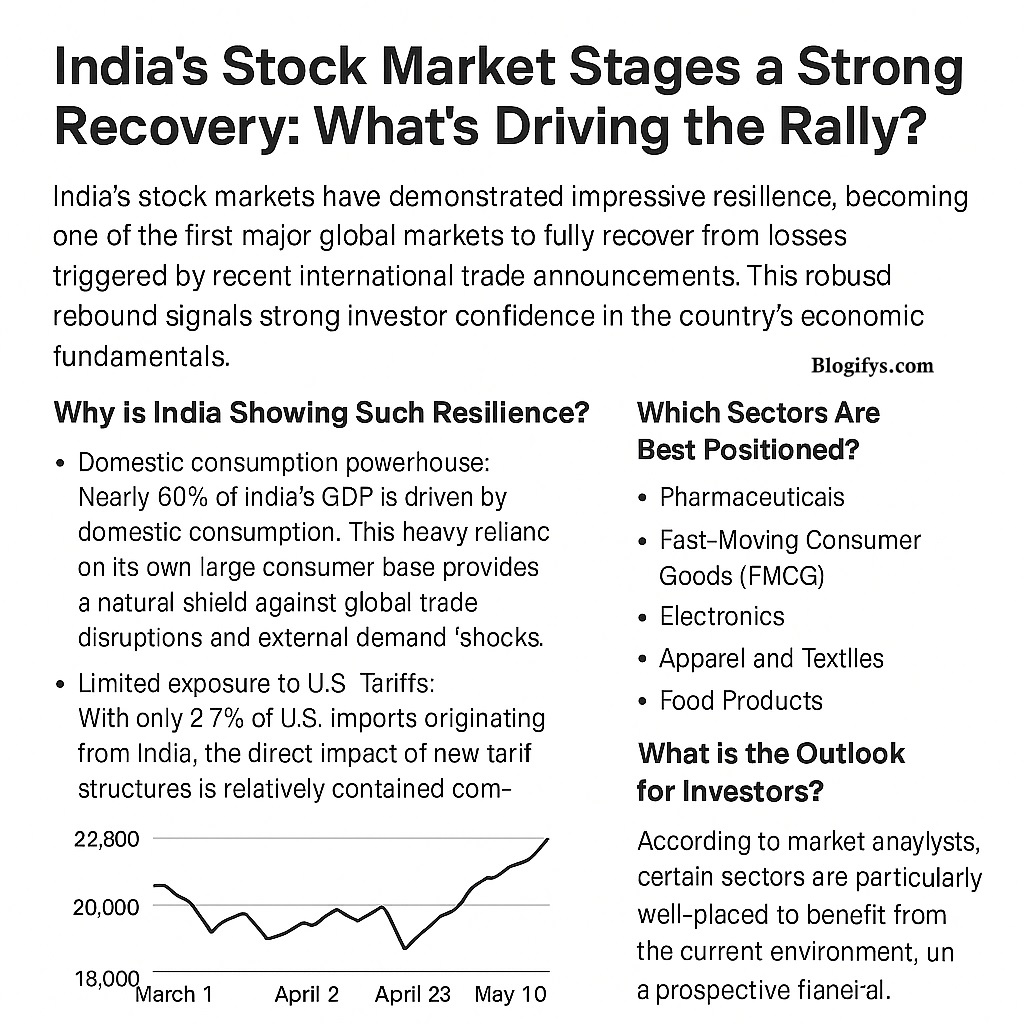
India’s Stock Market Stages a Strong Recovery: What’s Driving the Rally?
India’s stock markets have demonstrated impressive resilience, becoming one of the first major global markets to fully recover from losses triggered by recent international trade announcements. This robust rebound signals strong investor confidence in the country’s economic fundamentals.
The NSE Nifty50 index surged significantly, reclaiming its value from before the April 2nd announcements and sending a powerful message to international investors. This rally stands in stark contrast to the more subdued performance seen in other Asian markets during the same period.
Why is India Showing Such Resilience?
Several key factors are contributing to the strength of the Indian markets:
- Domestic Consumption Powerhouse: Nearly 60% of India’s GDP is driven by domestic consumption. This heavy reliance on its own large consumer base provides a natural shield against global trade disruptions and external demand shocks.
- Limited Exposure to U.S. Tariffs: With only 2.7% of U.S. imports originating from India, the direct impact of new tariff structures is relatively contained compared to other exporting nations.
- Relative Advantage: When compared to the tariff rates faced by competing countries like China, Bangladesh, Vietnam, and others, India’s exports to the U.S. potentially hold a new competitive edge, opening opportunities in various sectors.
- Supportive Macroeconomic Factors: Lower crude oil prices, a strengthening rupee, easing inflation, and strong domestic corporate earnings have all combined to create a bullish foundation for the market.
Which Sectors Are Best Positioned?
According to market analysts, certain sectors are particularly well-placed to benefit from the current environment:
- Pharmaceuticals: This sector faces no additional tariffs, providing stability and potential for growth.
- Fast-Moving Consumer Goods (FMCG): Benefitting from strong domestic demand, this sector is expected to perform well.
- Electronics: A freeze on announced tariffs for this category offers a clear advantage.
- Apparel and Textiles: India now has a significant tariff advantage over key competitors like Bangladesh and Sri Lanka, which face much higher rates. This could lead to a boom in apparel exports.
- Food Products: This sector is also expected to see continued strength.
Sectors that may face headwinds include commodities like metals (where margins are thin) and gems & jewelry, which remains uncertain.
What is the Outlook for Investors?
While the future is always uncertain, the consensus is cautiously optimistic. The momentum could continue if global sentiment stabilizes and a prospective bilateral trade deal with the U.S. reaches a favorable conclusion.
For investors, the advice is to stay invested and avoid panic selling. While it may be prudent to review and modify portfolios by exiting underperforming stocks, the general guidance is to maintain exposure to the market. The peaks of the previous year may not be immediately surpassed due to ongoing uncertainties, but the long-term fundamentals for the Indian market remain strong, making it a bright spot in the global landscape.